
The Student’s Guide to Holistic Concussion Recovery

Immediate Action: Red Flags
If you suspect a concussion, stop your activity immediately—especially sports. If you or a friend experience severe neck pain, double vision, seizures, repeated vomiting, or loss of consciousness, call 911 or seek emergency medical help right away
A Holistic Approach to Healing
Recovery isn't just about lying in a dark room (in fact, total isolation can sometimes make things worse!). It requires a balance of physical and psychological care.
1. Physical Recovery
Rest & Activity: Take 3-5 days of relative rest, then slowly resume activity as tolerated.
Sleep Hygiene: Stick to a consistent wake/sleep schedule. Avoid long naps (keep them under 25 minutes) to ensure you can sleep at night.
Diet: Focus on foods that lower inflammation. Try to include omega-3s (salmon, walnuts, avocados) and blueberries in your diet.
2. Psychological Support
Stay Connected: Isolation breeds depression. Maintain social connections even if it's just a quiet coffee with a friend.
Gratitude: It might sound simple, but writing down three things you are grateful for upon waking can help combat the anxiety often associated with TBI.
Validation: Read memoirs or listen to podcasts like Ask ConcussionDoc or The Post Concussion Podcast to hear stories from others who understand what you are going through.
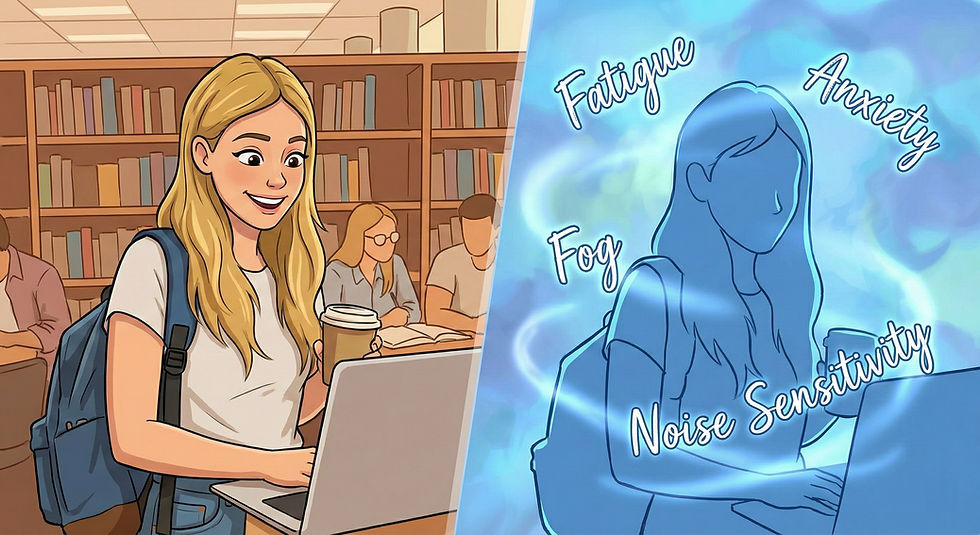
3. Academic Survival Kit Returning to school while recovering is tough.
Accommodations: You don’t need to be symptom-free to return, but you may need adjustments. Connect with your school’s accessibility center for things like extended exam time or a quiet room.
Standing Deferrals (SD): If you are at UBC or a similar institution, look into Standing Deferrals if you cannot complete coursework due to your injury.
Helpful Tools: Consider using blue light glasses, "Flux" browser extensions to dim screens, or text-to-speech software to reduce eye strain while studying.
Remember: Healing is not a straight line. Give yourself grace and patience as your brain recovers.
References
Parachute. (n.d.). Concussion Guide for Parents and Caregivers.
Cleveland Clinic Journal of Medicine. (2017). Managing concussions.
Wake Up Brain. (n.d.). Books & Recovery Resources.
Huberman Lab Podcast. (n.d.). Brain health & nutrition.


Comments